
Richmond Concrete Experts pours stamped concrete and exposed aggregate for patios, driveways, walkways, and entries across Richmond and the North East Bay. Both are decorative concrete finishes, but they look and wear differently, and the right choice depends on where the concrete is going and how much you want to maintain it.
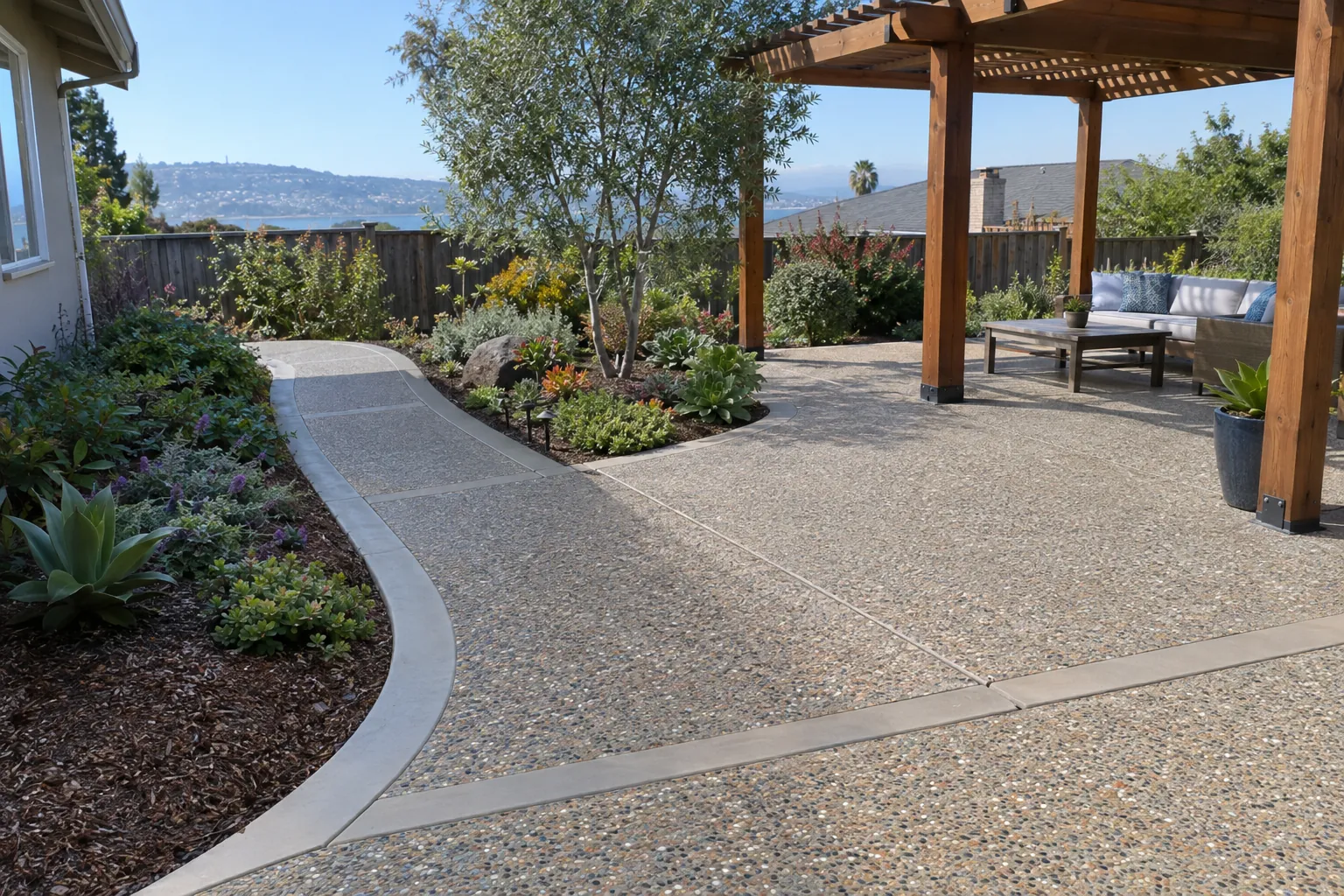
Exposed Aggregate: The Bay Area Classic
Walk any older East Bay neighborhood and you'll see exposed aggregate driveways and walks, many of them decades old and still good-looking. To make it, we pour the concrete, finish it, and then wash or retard the top layer of cement paste so the stone underneath is revealed.
Why people choose exposed aggregate
- Strong grip underfoot, even on wet winter days and steep driveways - Hides tire marks, leaf stains, and the small color variations that show on plain gray concrete - Durable surface with no pattern to wear off - Works well alongside gardens, wood, and natural stone
Choosing the stone
The look depends on the aggregate: small pea gravel gives a fine, even texture, while larger river rock is bolder. Stone colors range from mixed earth tones to grays and whites. Some homeowners add a seeded topping for more stone at the surface.
Stamped Concrete
Stamped concrete is pressed with textured mats while it's still plastic, giving it the look of stone, brick, tile, or wood.
Popular stamped patterns
- Ashlar slate: rectangular stone pattern, the most requested for patios - Random stone and flagstone: irregular shapes for a natural look - Cobblestone and European fan: common for driveway borders and entries - Brick: running bond or herringbone for walks and borders - Wood plank: a wood-deck look without the rot or splinters
Color
Integral color is mixed into the concrete so the color goes all the way through. A release agent in a second color is applied before stamping and settles into the low spots, adding depth and highlights. Stains can add variation after curing.
Stamped vs. Exposed Aggregate
- Look: stamped imitates another material; exposed aggregate looks like natural stone set in concrete.
- Traction: exposed aggregate is grippier. Stamped concrete can be slick when wet, so we add a slip-resistant additive to the sealer.
- Maintenance: stamped concrete should be resealed every few years to keep its color and sheen. Exposed aggregate benefits from sealing but is more forgiving.
- Best uses: stamped for patios and entertaining areas; exposed aggregate for driveways, steep walks, and high-traffic paths.
Many projects combine them: an exposed aggregate driveway with a stamped border, or a stamped patio with a smooth or aggregate band.
Built Right Underneath
A decorative surface is only as good as the slab under it. Stamped and aggregate concrete get the same Class II aggregate base, rebar, slope, and control joints as any concrete patio or driveway. On stamped work, control joints are cut along pattern lines so they blend in.
Sealing and Care
Stamped concrete is sealed with an acrylic sealer that deepens color and protects against water and stains. In Richmond's damp winters, a breathable sealer and good drainage help prevent the white haze that forms when moisture gets trapped. Sweep regularly, rinse occasionally, and reseal every two to three years. Already have faded stamped concrete? Cleaning and resealing, or resurfacing, can bring it back.