
Richmond Concrete Experts handles concrete removal across Richmond: old driveways, cracked patios, backyard slabs, walkways, steps, footings, and the concrete people find buried under lawns when they start a landscaping project. We break it out, load it, haul it away for recycling, and leave a clean, graded area for whatever comes next.
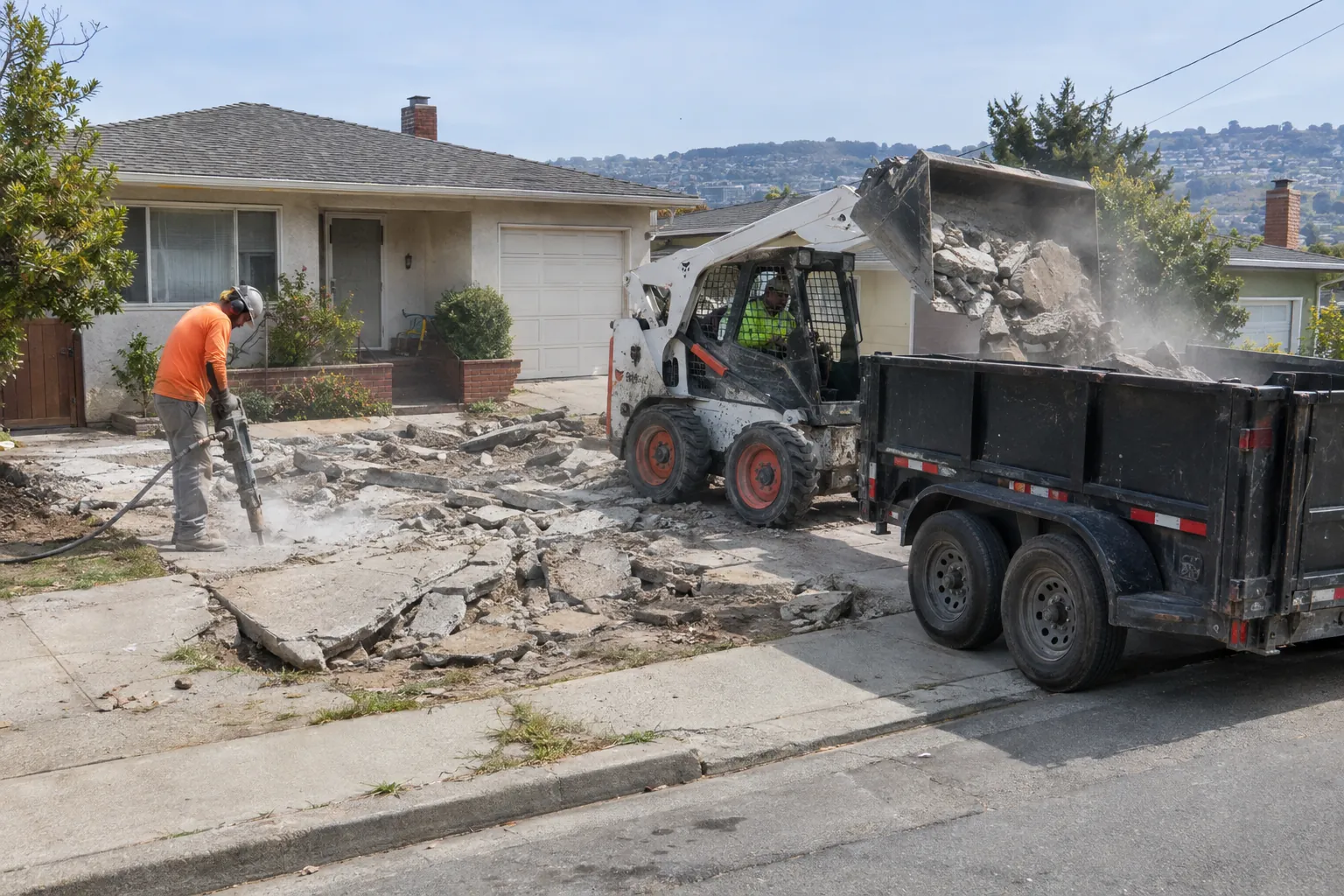
What We Remove
- Driveways and driveway approaches
- Patios, walkways, and side-yard paths
- Garage, shed, and hot tub slabs
- Front steps and stoops
- Old footings, post bases, and clothesline pads
- Concrete lawn areas being converted to garden or permeable landscaping
How Concrete Removal Works
1. Walk the job
We measure the area, check thickness at an edge if we can, and look for rebar or mesh, which makes breaking slower. We also look at access: how close a truck or bin can get, whether a skid steer fits through the side yard, and what needs protecting.
2. Mark utilities
Before any breaking or digging, we call USA North 811 so underground lines are marked. Irrigation lines and low-voltage lighting aren't marked by 811, so we ask about those too.
3. Saw-cut the edges
When only part of the concrete is coming out, such as a few driveway panels or a section of patio, we saw-cut a clean line first. That keeps the concrete that stays from cracking and gives the new pour a straight edge to meet.
4. Break and load
Thin slabs are broken with jackhammers or a demo hammer. Thicker or reinforced concrete may call for a skid steer with a breaker. Rebar and mesh are cut free as the pieces come up.
5. Haul and recycle
Clean broken concrete is taken to a recycling yard, where it's crushed for reuse as base rock and fill instead of going to a landfill.
6. Grade and prep
Once the concrete is out, we rake and grade the area. If new concrete is next, we excavate for the base; if you're planting, we can leave it ready for soil.
Tight Lots and Hillside Access
Plenty of Richmond homes, especially in Point Richmond, the Richmond Annex, and older neighborhoods near downtown, have narrow side yards, steps, or steep driveways. When equipment can't get in, removal is done by hand with smaller breakers and wheelbarrows, which takes longer but protects fences, landscaping, and foundations.
Removal Before New Concrete
Most removal jobs are the first half of a replacement. Doing both with one crew means the old concrete comes out, the base is inspected and rebuilt, and the new pour happens on schedule. See concrete driveways and concrete patios.
What we often find underneath
Old Richmond concrete was frequently poured straight on native soil with little or no base rock. Some panels sit on clay that has swelled and shrunk for decades; near the shoreline, some sit on fill that has settled. Tree roots under walks and driveways are common. All of that gets addressed before anything new is poured.
Sidewalks and Driveway Approaches
Removing a public sidewalk panel, a driveway approach, or curb and gutter is work in the city right-of-way. In Richmond, that requires an encroachment permit from Public Works. We handle the permit when removal is part of a replacement job; see sidewalks, steps & walkways and our Richmond concrete permits guide.
Keeping the Mess Contained
Breaking concrete makes noise and dust. We wet down the work area to control dust, protect nearby windows and siding, keep debris off neighbors' property, and sweep the street and sidewalk when we leave each day.