
Richmond Concrete Experts repairs and replaces public sidewalks, builds concrete steps, and pours garden walkways for homes and rental properties across Richmond. If a city notice or a lifted panel brought you here, this page covers who is responsible, what the permit involves, and how the work gets done.
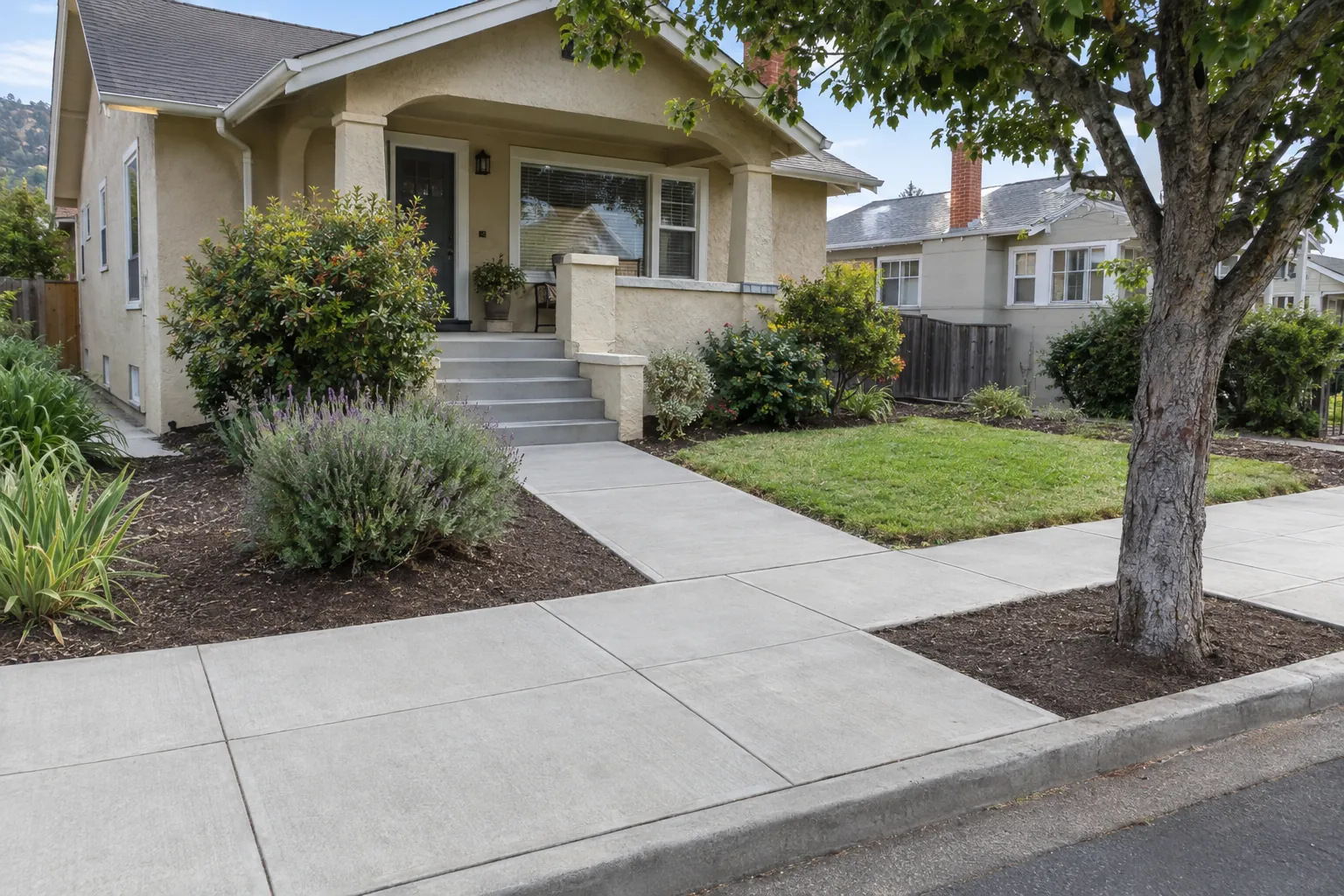
Who Is Responsible for the Sidewalk in Front of My House?
In most of California, it's the property owner. Streets and Highways Code section 5610 places the duty to keep a sidewalk safe on the owner of the adjacent lot, and the City of Richmond states that property owners are responsible for maintaining the sidewalk, driveway approach, and curb and gutter area in front of their property. When a city finds a damaged sidewalk, it can notify the owner to repair it, and if the repair isn't made, state law allows the city to do the work and charge it to the property.
That responsibility also matters for liability: a trip-and-fall on a raised panel is a real risk, especially on a rental.
The Encroachment Permit
The sidewalk sits in the public right-of-way. Richmond requires an encroachment permit for any work on the sidewalk, driveway approach, or curb and gutter, and work that removes and replaces pavement requires a refundable deposit and a city inspection. We prepare and submit the permit, schedule the inspection, and build the new sidewalk to the city's standard so the deposit comes back. Read more in our Richmond concrete permits guide.
Sidewalk Repair Options
Grinding small lifts
Offsets up to about an inch can often be ground into a smooth, gradual transition. It's fast and inexpensive when the panel itself is still solid.
Replacing panels
Broken, sunken, or root-lifted panels are saw-cut at the joints, removed, and hauled away. The base is regraded and compacted with Class II aggregate base, dowels tie the new panels to the old ones where needed, and the new concrete is finished with a broom texture to match the street.
Dealing with street-tree roots
Most sidewalk damage in Richmond comes from street-tree roots. Roots under the panel are exposed, and any pruning or root barrier work on a city street tree is coordinated with the city, since cutting the wrong root can kill or destabilize a tree.
Concrete Steps
Front steps take more abuse than almost any other concrete on a house. We repair chipped nosings and cracked treads, and we replace failing steps with new formed and reinforced steps. Good steps have:
- Consistent riser heights and tread depths, so nobody trips
- A slight forward slope on each tread so rainwater runs off
- A footing and rebar tied into the porch or landing
- Room for a handrail where code calls for one
On older Richmond homes, the front steps often lead up from a sloped yard, so new steps may be paired with a short retaining wall or a new landing.
Walkways and Garden Paths
From the side gate to the back patio, a concrete walkway should be at least 3 to 4 feet wide, pitched slightly so water runs off, and jointed so cracks stay straight. Finishes range from a simple broom texture to exposed aggregate or a stamped pattern. See stamped & exposed aggregate.
How a Sidewalk Job Goes
- We meet at the property, mark the panels that need work, and explain the options.
- You get a written quote that includes the permit, removal, base, concrete, and inspection.
- We submit the encroachment permit and call USA North 811 to mark utilities.
- Old panels come out and go to a recycler; base, forms, and dowels go in.
- We pour, finish, and barricade the new sidewalk while it cures, then call for the city inspection.