
Richmond Concrete Experts repairs cracked, sunken, lifted, and worn concrete across Richmond. Plenty of the concrete in this city was poured during the 1940s and 1950s building boom, and after seventy-plus years of tree roots, settling fill, and wet winters, a lot of it is showing its age. Concrete repair is often all it needs. We'll tell you honestly when that's true and when it isn't.
Start With the Cause
A patch that ignores the cause comes back. Before we quote any concrete repair, we look at why the slab failed:
- Settling ground. Lots on the bay flats often sit on Bay mud or fill that compresses over time, so slabs sink and tilt.
- Swelling clay. Expansive clay lifts slabs in the wet months and drops them again in the dry season, cracking them along the way.
- Tree roots. Street trees and yard trees push panels up from below, creating trip hazards and broken edges.
- Water. Downspouts dumping onto a slab, or runoff flowing under it, wash out the base and leave voids.
- The original work. Thin slabs, no base, no steel, or missing joints.
Types of Concrete Repair We Do
Crack repair
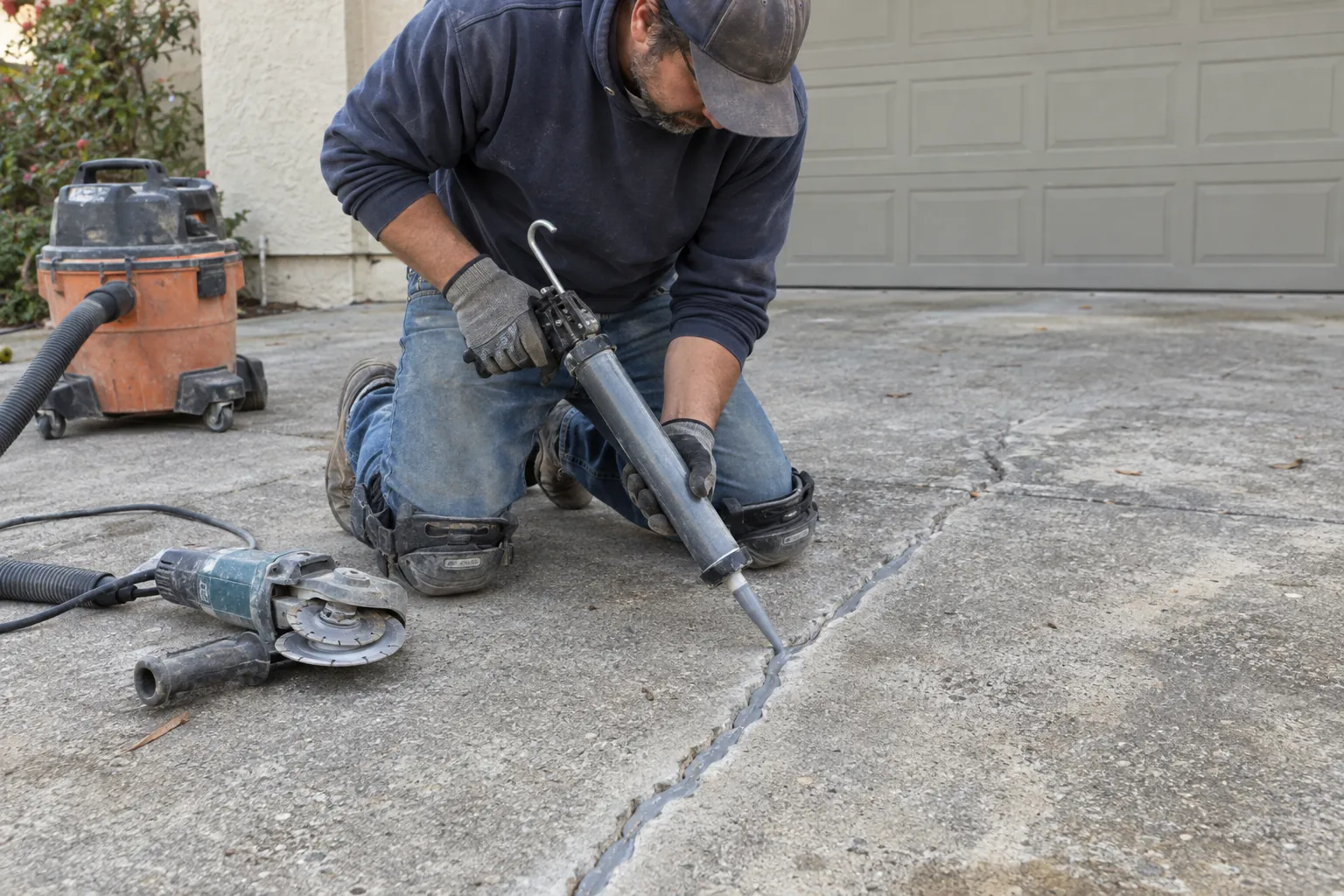
Narrow cracks are cleaned, routed, and filled with a flexible polyurethane or epoxy-based sealant that keeps water out of the base. Structural cracks in walls and steps may need epoxy injection.
Section replacement
When individual panels are broken, sunken, or lifted by roots, we saw-cut them out at the joints, fix what's underneath (new base, root pruning where allowed), drill dowels into the neighboring concrete, and pour new sections that tie in.
Spall and surface repair
Flaking, pitted, or chipped surfaces are cleaned and patched with a polymer-modified repair mortar. Large worn areas may be better served by resurfacing.
Trip hazard grinding
Lifts of up to about an inch can sometimes be ground down to a smooth ramp, a quick, low-cost fix for sidewalk and walkway offsets.
Joint repair
Old, failed joint filler is cut out and replaced so water stops getting into the base.
Repair or Replace?
We decide based on the damage, not the size of the ticket:
- Repair when cracks are narrow and the slab is still level and solid.
- Replace sections when a few panels are badly broken, sunken, or lifted.
- Replace the whole slab when it's broken into many pieces, the base has washed out across large areas, or the slab was too thin from the start. See concrete driveways for what a full replacement involves.
Sidewalk Repair Notices
If the City of Richmond has sent you a notice about a damaged sidewalk in front of your home, you're not alone. Under California law, adjacent property owners are responsible for keeping sidewalks safe, and Richmond states that property owners are responsible for maintaining the sidewalk, driveway approach, and curb and gutter area. Work there requires an encroachment permit. Our sidewalks, steps & walkways page explains the process.
Repairs That Match
New concrete starts lighter than old concrete and weathers closer over time. On exposed aggregate or colored concrete, we match the stone and color as closely as possible, and we'll show you what to expect before we pour.