
Richmond Concrete Experts builds concrete patios for Richmond backyards, from small courtyard patios behind Point Richmond Victorians to wide entertaining areas on hillside lots with a bay view. Richmond's mild weather means you can use a patio most of the year, so it's worth building one that drains, stays level, and looks good doing it.
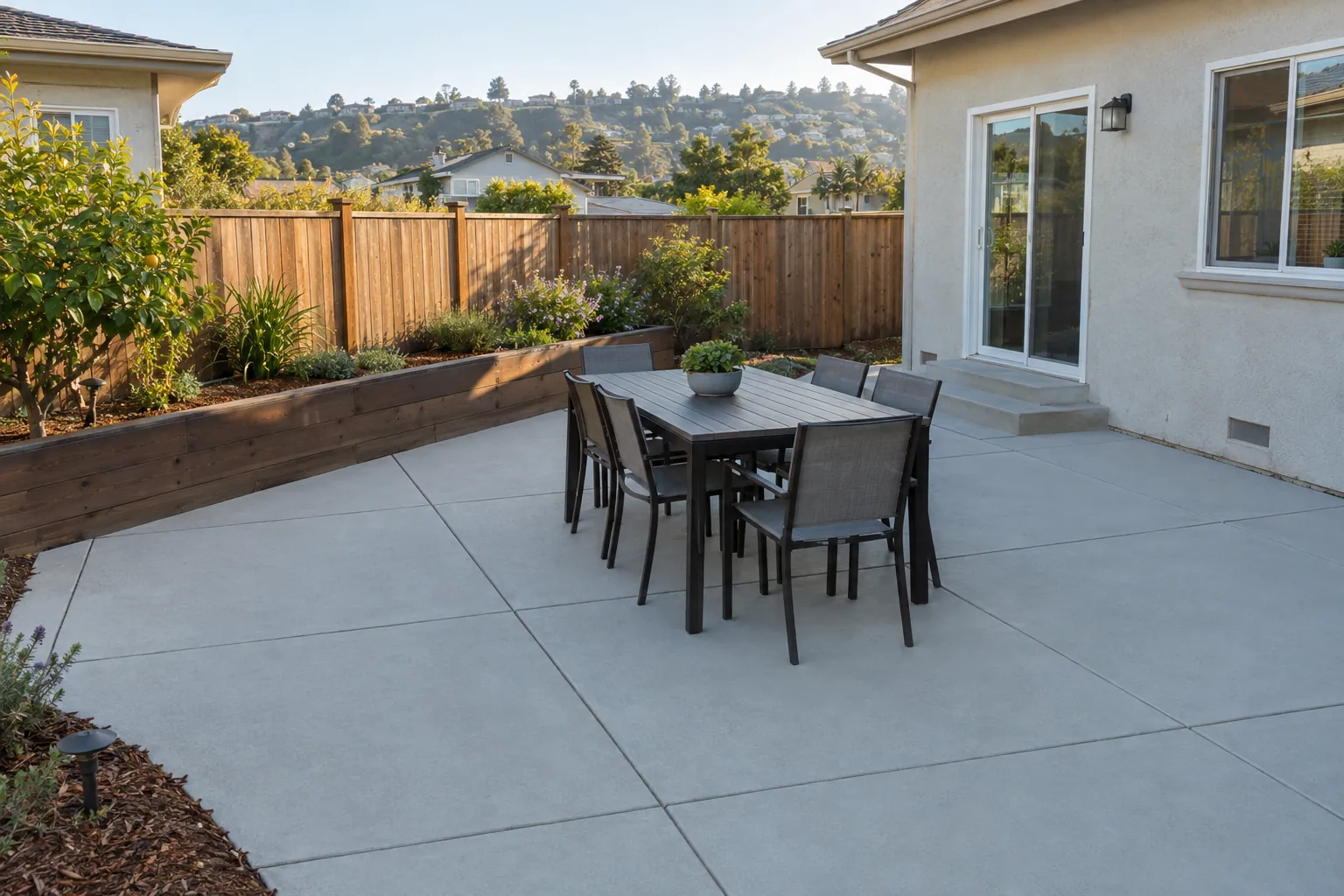
Planning a Patio That Gets Used
Size it for the furniture
A dining table for six with chairs pulled out needs roughly 12 by 12 feet. A lounge set, grill, or fire table needs more. We sketch the layout with you so the patio fits what you'll actually put on it, with room to walk around.
Decide where the water goes
In Richmond, the patio question that matters most is drainage. Winter storms drop several inches of rain a month from November through March, and a patio is a big hard surface sending that water somewhere. We slope the slab about 1/8 to 1/4 inch per foot away from the house and toward lawn, planting beds, or a drain. Where the yard is flat or drains toward the house, we add a channel drain or area drains piped to daylight or the storm system.
Shade and wind
Afternoon wind off the bay is real, especially from spring through summer. Placing the patio in the lee of the house or a fence, or planning for a pergola or wind screen, makes it far more comfortable.
How We Pour a Concrete Patio
- Excavate and remove topsoil, roots, and soft material.
- Place and compact Class II aggregate base, typically 4 inches, more where the soil is soft clay or Bay mud.
- Set forms to grade, with the slope built in.
- Install rebar on chairs or welded wire mesh, plus an isolation joint where the patio meets the house foundation.
- Pour a 3,000 to 4,000 psi mix, screed, float, and finish.
- Cut control joints and cure the slab properly.
How thick is a patio?
4 inches is standard for foot traffic and furniture. If the patio will carry a heavy outdoor kitchen, a spa, or a masonry fireplace, we thicken it in those areas.
Patios on Slopes and Hillside Lots
Many Richmond Heights, Hilltop, and El Sobrante yards slope away from the house. Rather than fight the grade, we can terrace the yard with a low retaining wall to create a level patio, add concrete steps between levels, or build seat walls that double as edges.
Finishes and Patterns
- Broom finish: simple, affordable, slip-resistant.
- Salt or sand finish: a softer, finer texture that's comfortable barefoot.
- Exposed aggregate: the classic Bay Area look, with stones showing at the surface.
- Stamped concrete: slate, flagstone, cobblestone, or wood-plank patterns with integral color.
- Colored concrete and borders: a contrasting border or band frames the patio.
See stamped & exposed aggregate for patterns, colors, and sealing.
Extending an Existing Patio
An old patio that's too small can often be extended with a new section doweled into the existing slab, or separated with a deliberate joint or border so the old and new concrete don't need to match exactly. If the old patio is cracked, tilted toward the house, or lifted by roots, replacing it may make more sense. See concrete repair.
Concrete or Pavers?
Both work here. Concrete is generally less expensive per square foot and easier to keep clean; pavers are easier to repair one piece at a time on shifting ground. Our concrete vs. pavers guide compares them side by side, and the concrete cost guide covers budgeting.