
Richmond Concrete Experts installs epoxy garage floor coatings in Richmond homes, from 1940s single-car garages to newer two- and three-car garages in the hills. An epoxy garage floor seals the concrete against oil and water, cleans up with a mop, and turns a dusty slab into a floor that looks finished.
Why Garage Floor Coatings Fail (and How We Avoid It)
Most peeling garage coatings fail for one of three reasons: the concrete wasn't prepared, moisture was coming up through the slab, or the product was a thin, store-bought paint. We address all three before any coating goes down.
Diamond grinding
We grind the floor with a diamond grinder and vacuum extraction. Grinding removes the weak top layer, old paint, sealer, and oil residue, and leaves an open texture the coating can bond to. Acid etching is a weaker substitute that we don't rely on.
Moisture testing
Older Richmond garages were often poured without a vapor barrier, and the ground on the flats near the bay can stay damp most of the winter. Moisture moving up through the slab pushes coatings off from below. We test the slab, and if moisture is high, we use a moisture-mitigating primer rated for it.
Crack and spall repair
Cracks, pitting, and spalled areas are filled with an epoxy or polyurea repair material and ground flush, so they don't show through the finished floor.
Coating Systems
100% solids epoxy
A thick, durable base coat with strong adhesion. It's the workhorse of most garage floor systems.
Polyaspartic and polyurea topcoats
Faster-curing topcoats that resist UV yellowing and hold up well to hot tire pickup. They are often used as the final clear coat over an epoxy base, and are a good choice for garages with doors that stay open to afternoon sun.
Decorative flake
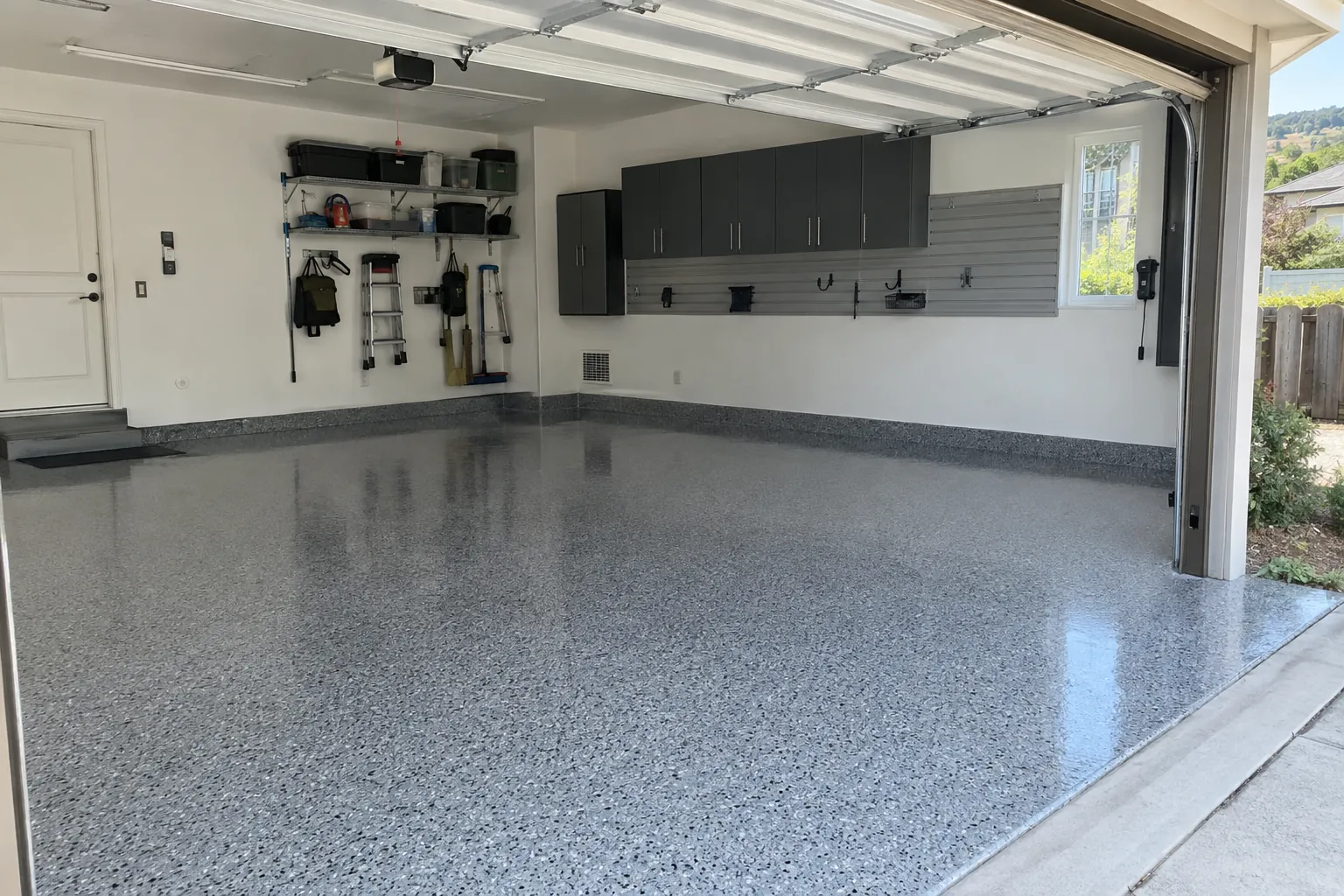
Vinyl color flakes broadcast into the wet base coat hide dust and small imperfections, add texture, and come in blends from subtle grays to bold mixes. Full-broadcast flake floors are the most common choice for homes.
Solid color and metallic
Solid colors suit workshops and gyms. Metallic epoxy gives a swirled, high-gloss look that some homeowners use in converted garages and studios.
Slip Resistance
A glossy floor gets slick when wet, and Richmond garages see plenty of wet tires between November and March. We add an anti-slip aggregate to the topcoat, more of it near the door and walkways, so the floor keeps its grip in the rainy season.
The Install, Step by Step
- Clear the garage and protect walls and the door seal
- Diamond grind, vacuum, and test for moisture
- Repair cracks, spalls, and joints
- Apply the primer or base coat and broadcast flake
- Scrape and vacuum excess flake
- Apply the clear topcoat with anti-slip texture
Most two-car garages are done in one to two days, depending on the system and repairs.
Living With a Coated Floor
Light foot traffic is usually fine within a day. Wait the full time on the product label before parking, typically a few days. After that, a dust mop and a pH-neutral cleaner keep it looking new. Place mats where tires sit if you drive in on wet or gravel-covered tires.
Coatings for Other Spaces
The same systems work on laundry rooms, basements, workshops, and backyard studios. For new garage slabs or ADU floors, we can plan the coating from the start; see slabs & pads. Commercial floors that need a polished look without a coating are covered under polished concrete.