
Richmond Concrete Experts resurfaces and seals tired concrete across Richmond, giving driveways, patios, pool surrounds, and walkways a new surface without tearing them out. Concrete resurfacing works when the slab underneath is still solid and the problem is the top: worn paste, stains, old patches that don't match, or a surface that has started to wear away.
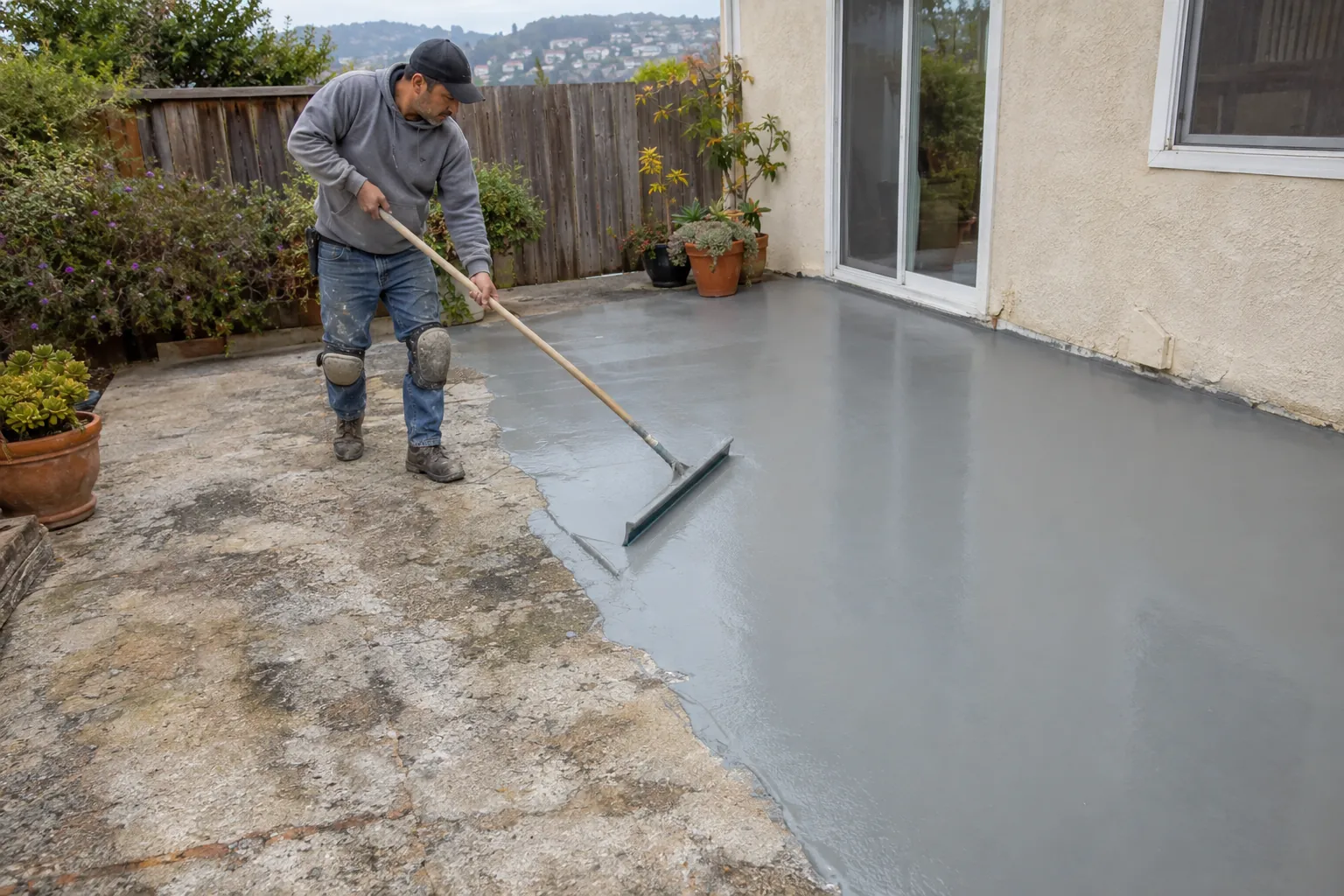
Is Your Concrete a Good Candidate?
Resurfacing is a skin, not a structural fix. Before we quote one, we check the slab itself.
Good candidates: - Surface wear that exposes sand and small stone - Stains from oil, rust, leaves, or irrigation water - Hairline and small cracks that aren't moving - Mismatched patches from old repairs - Dated finishes you want to change in color or texture
Poor candidates: - Panels that have sunk, heaved, or tilted - Cracks that open wider every rainy season - Slabs broken into many pieces - Concrete lifted by tree roots
If the slab is moving, an overlay will crack right along with it. In those cases concrete repair or partial replacement is the honest answer.
Resurfacing Options
Polymer-modified overlay
A cement-based overlay with polymers added for bond and flexibility, troweled or squeegeed on at about 1/8 to 1/4 inch. It can be finished smooth, with a light broom texture, or with a knockdown "splatter" texture that's comfortable underfoot.
Spray-down and knockdown textures
Common on patios and pool surrounds. The texture keeps traction when wet and stays cooler than a smooth surface in sun.
Stamped overlay
A thicker overlay, around 3/8 to 1/2 inch, that can be stamped with stone or slate patterns. It turns plain gray concrete into a decorative surface without a full tear-out. For new decorative work, see stamped & exposed aggregate.
Micro-topping
A very thin, fine-grain coat for a smooth, modern look, more often used on interior floors and steps.
How Resurfacing Is Done
- Repair first. Cracks are routed and filled, spalled spots are patched, and loose material is removed.
- Profile the surface. The slab is pressure washed and mechanically ground or shot-blasted so the overlay can grip. Overlays fail most often because this step was rushed.
- Keep the joints. Existing control joints are marked and recut through the new surface, or the overlay will crack over them anyway.
- Apply and texture the overlay in thin, even coats.
- Seal with a sealer suited to the finish and the traffic.
Concrete Sealing
Sealing is the most affordable thing you can do for existing concrete, and in Richmond it pays off. Months of winter rain, damp fog near the bay, and salt air all work on unsealed concrete.
Penetrating sealers
Silane and siloxane sealers soak into the concrete and repel water without changing how the surface looks or feels. They are a good fit for broom-finished driveways and walks.
Film-forming sealers
Acrylic sealers sit on the surface and add a satin or wet-look sheen. They bring out color on stamped and exposed aggregate concrete and need re-coating every few years.
When to seal
On new concrete, wait about 28 days. Seal during a dry stretch, typically late spring through early fall, so the slab is fully dry and no rain falls before it cures.
Cleaning Before You Seal
Sealing a dirty slab locks the stains in. Oil spots get a degreaser, rust from irrigation or furniture gets a dedicated rust remover, and mildew from shaded north-side patios gets cleaned and rinsed before any sealer goes down.
Resurfacing vs. Replacement
Resurfacing usually costs less, causes far less disruption, and skips demolition and hauling. Replacement makes sense when the base has failed or the slab is badly broken. On a free on-site estimate we tell you which one your concrete actually needs.